The Computational and Mathematical Modeling Program (CAMMP) – Lessons Learned on Interdisciplinary Challenge-Based Learning
Zusammenfassung
Mathematical modelling is a key engineering competence. However, many textbook problems fall short of the complexity and ambiguity of the real-world. The Computational and Mathematical Modeling Program (CAMMP) is a cross-university project to foster skills in mathematical modelling, including model building, implementation and evaluation. During the CAMMP week Pro (CWP), Bachelor’s and Master’s students of different engineering disciplines and mathematics jointly work on real-world research problems from industry and academia. In this work, we present a case study of five iterations of the CWP. We outline the structure of the course and evaluate it based on qualitative analysis of student feedback and evaluation documents. We find that students sometimes struggle with the open nature of challenges, and that their study experience is strongly shaped by the supervision they experience. Furthermore, we derive practical recommendations regarding collaboration, supervision and students’ perception of their roles both as group members and as aspiring engineers and scientists.
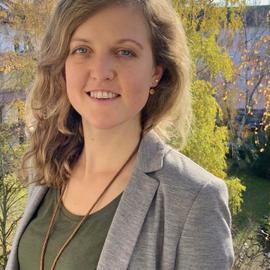
Sarah Schönbrodt
Assistenzprofessorin @ Universität Salzburg
Forschung im Bereich Mathematikdidaktik und KI-Bildung